Nissan Skyline VI (R30) photos
Photos
1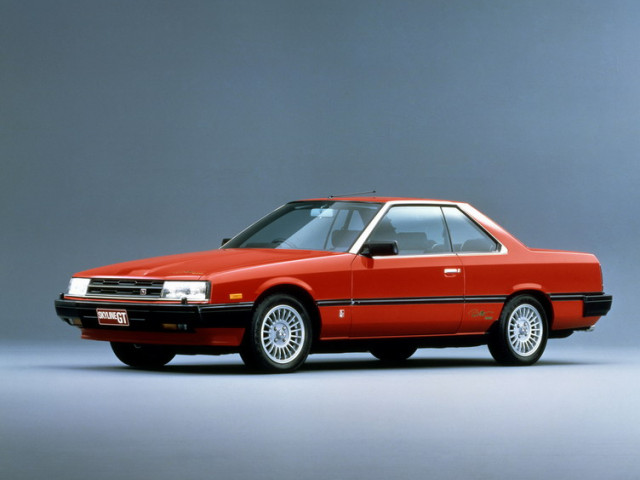 43
About this generation
The sixth-generation Nissan Skyline (R30), built from 1981 to 1985, introduced the unified R-chassis nomenclature, a five-door hatchback body style, and the legendary DOHC FJ20-powered 2000RS variants.
Debuting in August 1981 with Paul Newman as its high-profile promotional ambassador, the sixth-generation R30 Nissan Skyline marked a major architectural shift over the outgoing C210. For the first time since the 1960s, four-cylinder and six-cylinder variants shared an identical wheelbase and front nose length, packaged in a lighter, sleeker wedge-shaped body. The R30 also expanded the body style offerings: alongside the traditional four-door sedan, two-door pillarless hardtop coupe, and five-door station wagon, Nissan introduced a versatile five-door liftback hatchback. Built on a rear-wheel-drive platform with front MacPherson struts and a semi-trailing arm independent rear suspension on upper grades (with leaf springs or four-link live axles on wagons and base models), the R30 offered sharp handling and optional two-way cockpit-adjustable shock absorbers. Base engine choices included 1.8- and 2.0-liter Z-series and later CA18 inline-four units, plus LD20 four-cylinder and LD28 six-cylinder diesels. Six-cylinder GT models carried over the 2.0-liter L20E and turbocharged L20ET in Japan, while export markets such as Australia, New Zealand, and South Africa received the 2.4-liter L24E or 2.8-liter L28E. The flagship performance role was filled by the 2000RS launched in late 1981, powered by the newly developed 2.0-liter DOHC 16-valve four-cylinder FJ20E engine, marking the first four-valve-per-cylinder Skyline since the KPGC110 GT-R. A turbocharged FJ20ET version arrived in early 1983, followed by an August 1983 facelift that gave the RS models a distinctive grille-less aerodynamic nose nicknamed the "Iron Mask" (Tekkamen), and an intercooled Turbo C variant in 1984. Transmissions included 4- and 5-speed manuals alongside 3- and 4-speed automatics.
Nissan news