Volkswagen Says Petrol Cars May Fade Away, Just Like Horses Did

Volkswagen believes the future of mobility will not be decided by bans alone. The company says battery-powered cars are likely to win over buyers because they make more sense in everyday use, and that internal combustion vehicles will slowly lose relevance as a result.

In Europe, electric cars are already taking a larger share of the market. ACEA figures show that fully electric models made up 20.9 percent of new registrations in the first four months of 2026, but the shift is still far from complete.

Martin Sander, Volkswagen’s board member responsible for sales, marketing, and after-sales, told Auto Express that the debate should focus less on the end date for combustion engines and more on why EVs deserve to be chosen in the first place.

A Natural Shift, Not a Forced One

VW’s view is that once consumers see electric vehicles as the stronger option, the market will gradually move in that direction without needing heavy pressure. Sander compared the situation to the early automobile era, when people slowly abandoned horses after realizing cars were a more practical way to travel.

He suggested that gasoline and diesel cars could follow the same historical path, becoming a relic of the past as EVs become the default choice.

Sander criticized the constant focus on the planned ICE ban, saying that telling customers they will one day be prohibited from using familiar vehicles is not the best way to encourage them to embrace new technology.

Policy Pressure and VW’s Alternative

The comments come against the backdrop of the European Union’s original plan to stop sales of new combustion-engine cars from 2035. That target has since been softened under industry pressure, although the EU still wants automakers to cut fleet emissions sharply by 2035 compared with 2021 levels.

Volkswagen says the better path is to highlight the benefits of EVs, improve charging networks, and bring down electricity costs. In the company’s view, if the experience becomes easier and more appealing, drivers will move to electric cars willingly rather than feeling pushed by regulation.

Still, the transition will not happen overnight. Revenue from combustion-engine models continues to support the development of electric vehicles, and many automakers remain dependent on that income while EV profit margins are still limited.

Photos

More news

2028 Volkswagen ID.Buzz to Adopt SSP Platform, LFP Batteries, and Rivian-Backed Software
Volkswagen plans to overhaul the ID.Buzz electric minivan for the 2028 model year with its upcoming Scalable Systems Platform, lower-cost LFP batteries, and zonal software architecture developed with Rivian. The changes aim to improve charging speeds and cut the starting price after a two-year sales hiatus in the U.S. market.
17.Oct.2026
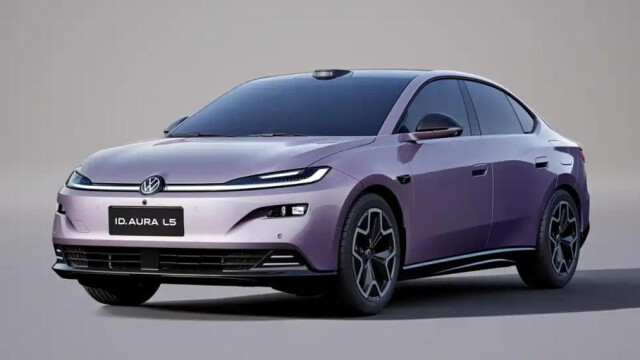
FAW-Volkswagen Reveals ID. Aura L5 Electric Liftback With Up to 310 kW
The FAW-Volkswagen joint venture has unveiled the exterior design and specifications of the ID. Aura L5 electric liftback built on the CMP platform. Measuring 4,883 mm in length, the model will be offered in a 155 kW rear-wheel-drive version and a 310 kW dual-motor all-wheel-drive variant.
17.Oct.2026
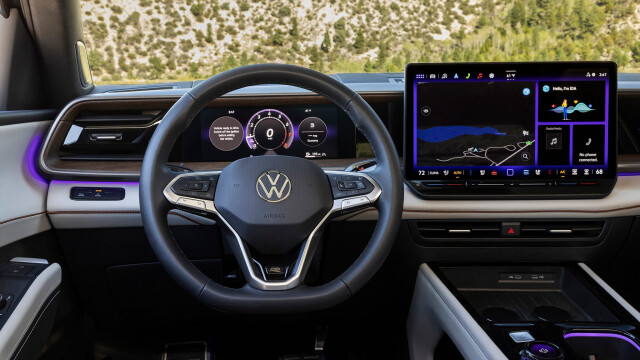
Redesigned 2027 Volkswagen Atlas interior gains 15-inch touchscreen and massaging seats
Volkswagen has revealed the redesigned cabin of the three-row 2027 Atlas, adding an available 15.0-inch touchscreen, massaging front seats, and a column-mounted gear selector. The update also brings expanded third-row legroom and new family-oriented convenience features.
12.Oct.2026
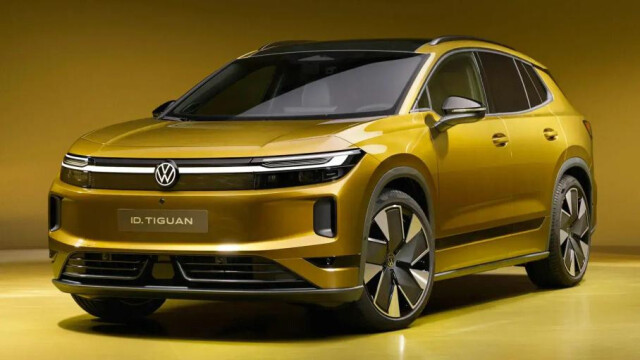
Volkswagen ID. Tiguan electric crossover debuts with up to 600 km of range
Volkswagen has unveiled the all-electric ID. Tiguan crossover, designed to replace the ID.4 and ID.5 models. Built on the MEB+ platform, the vehicle offers up to 299 hp, a driving range of up to 600 km, and a revised cabin featuring physical control buttons.
10.Oct.2026
Volkswagen ID. Tiguan Debuts as Electric Successor to ID.4 with Up to 373 Miles of Range
Volkswagen has unveiled the ID. Tiguan electric SUV, designed to replace the ID.4 and ID.5 starting in early 2027. The newcomer features an upright exterior design, a cabin with physical controls, and powertrains delivering up to 295 horsepower with a WLTP range of up to 373 miles.
09.Oct.2026
Volkswagen ID.Polo Debuts on MEB+ Platform with Up to 208 HP
Volkswagen introduced the production ID.Polo electric hatchback on the front-drive MEB+ architecture, featuring 37-kWh and 52-kWh battery choices. The compact EV returns to physical interior controls and offers powertrain outputs of up to 208 hp.
06.Oct.2026