2028 Volkswagen ID.Buzz to Adopt SSP Platform, LFP Batteries, and Rivian-Backed Software
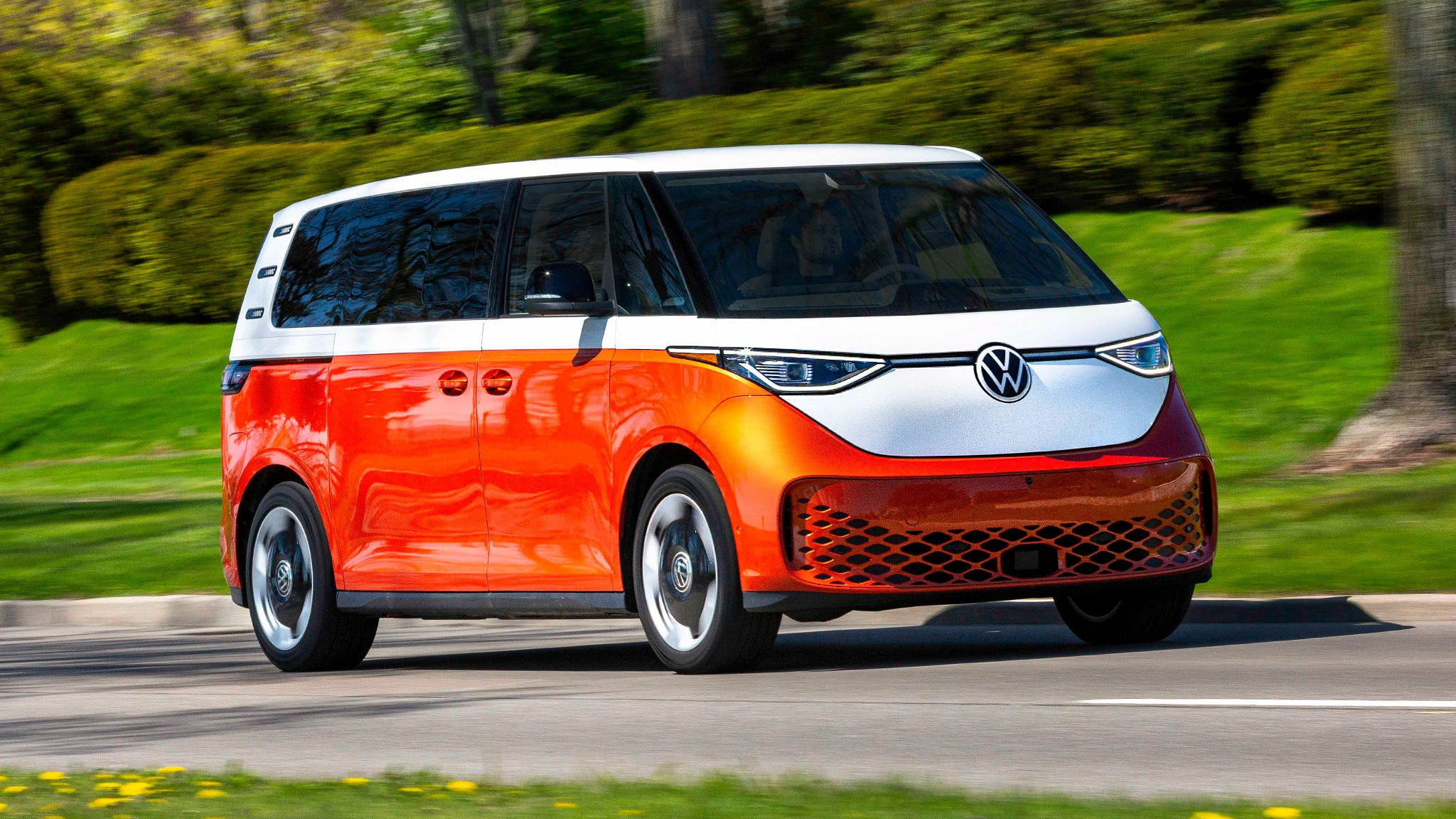
When the Volkswagen ID.Buzz electric minivan launched in the U.S. for the 2025 model year, it arrived with a high starting price of $61,545, reaching past $70,000 when fully loaded. Combined with uncompetitive charging speeds of 200 kW and an official range of roughly 230 miles (yielding 213 miles in MotorTrend's Road-Trip Range test), sales struggled. Consequently, Volkswagen halted U.S. sales for the 2026 and 2027 model years, planning to return in 2028 with a revamped version. Speaking with U.K. outlet Auto Express at the Paris auto show, VW CEO Thomas Schäfer shared new details on what to expect from the upcoming model.
The current ID.Buzz rides on the older MEB architecture dating back to 2019, which limits its range and charging performance. The 2028 model will transition to the Volkswagen Group's new Scalable Systems Platform (SSP), a highly modular architecture set to replace both MEB and PPE across all group brands and future EVs. This shift will allow easier integration of updated electronics, software, and automated driving systems, while economies of scale are expected to bring EV prices closer to internal-combustion equivalents.
To further reduce costs, the next ID.Buzz will switch from nickel-cobalt-manganese (NCM) lithium-ion batteries to cheaper lithium-iron-phosphate (LFP) chemistry. While LFP packs typically suffer in cold weather regarding range and charging speed, the 2028 Buzz is expected to counter this with onboard battery heating and a higher-voltage charging system. At optimal temperatures, modern LFP packs can charge rapidly, with some Chinese manufacturers developing packs capable of accepting up to 1,000 kW (1 megawatt).
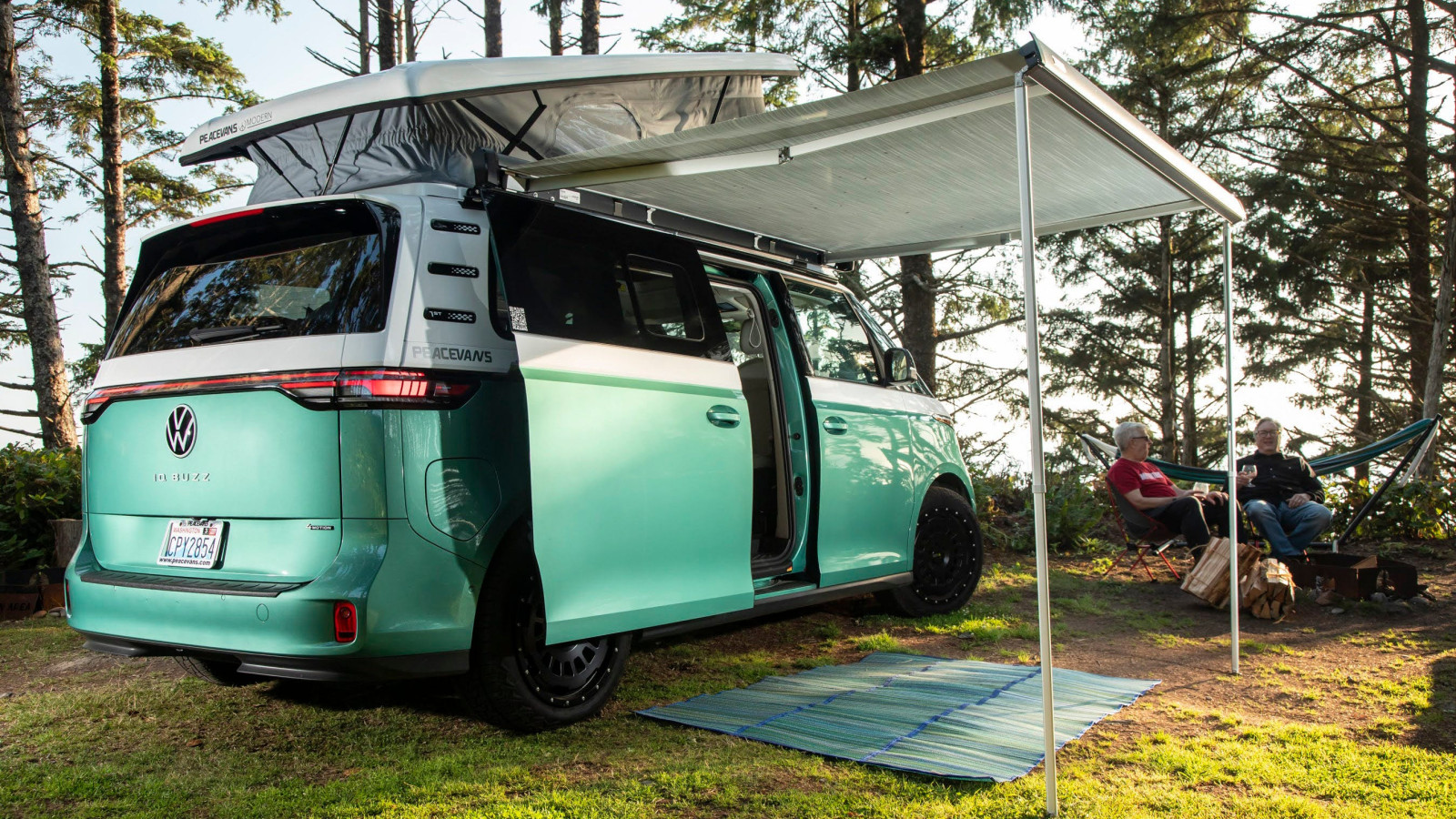
Pricing remains crucial for the van's U.S. comeback. Schäfer acknowledged that the current model sits on the wrong cost base. In the American market, the ID.Buzz competes against conventional minivans like the 2027 Honda Odyssey ($44,690) and Toyota Sienna (around $42,000), as well as three-row electric SUVs like the Kia EV9 ($56,545) and the three-row Tesla Model Y L ($63,630 in top-spec form, with a base version expected around $50,000). To be competitive, Volkswagen needs to cut at least $10,000 from the starting price to bring the U.S. MSRP close to $50,000. In Europe, VW also offers short-wheelbase, two-row, one-row, and panel van configurations alongside the long-wheelbase three-row model sold in America.
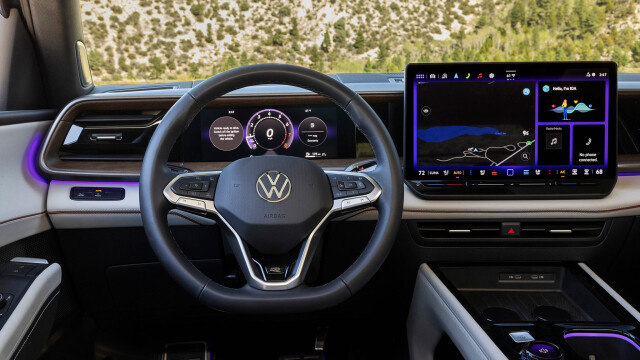
Inside, the 2028 ID.Buzz will move away from touch-capacitive controls toward more physical buttons. Its software will be developed by RV Tech, the joint venture between Rivian and Volkswagen, introducing a zonal software architecture that reduces the number of Electronic Control Units (ECUs) and wiring, speeds up system response, and minimizes software bugs. Meanwhile, VW design chief Andreas Mindt noted that he does not want to simply repeat the same retro styling—citing the New Beetle as a cautionary tale—and promised the next Buzz will look interesting while likely retaining signature heritage cues like the large front logo and two-tone paint options.
Photos
More news