Why the 2026 Toyota RAV4's Hybrid Technology Stands Out

Toyota's Hybrid System (THS) often doesn't receive the recognition it deserves. With nearly 20 years on the market, THS represents one of the most sophisticated engineering achievements in the automotive industry. However, it's a system that remains largely misunderstood. Grasping its basic functionality is essential to truly value THS and Toyota's decision to make it standard across the new RAV4 lineup.
Here's a breakdown of its operation: Instead of using a conventional transmission to propel the vehicle, THS employs two electric motor-generators connected to a planetary gearset, positioned where a transmission typically resides. To recap, a planetary gearset features a central sun gear, orbiting planet gears, and an outer ring gear. Toyota’s design includes a separate planet carrier that links all the planet gears.
The first motor-generator (MG1) is smaller and directly linked to the engine and the sun gear of the planetary gearset. It functions as the engine's starter and, alongside the engine, acts as a generator to replenish the battery. The second motor-generator (MG2) is larger and connected to the ring gear, which in turn is linked to the differential. Typically, MG2 is responsible for driving the wheels independently, but since both the engine/MG1 and MG2 share the same planetary gearset, the engine can also assist in wheel propulsion. This dual capability allows the engine to operate both in series and parallel with MG2, categorizing the system as a “series-parallel” hybrid.
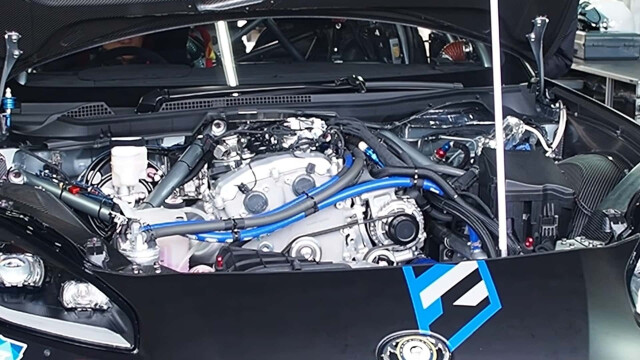
While the concept might seem intricate, the actual components are remarkably straightforward. An engine optimized for efficient RPMs, a pair of electric motors, and a few gears make up the system. In contrast, a standard automatic transmission might contain four or five planetary gearsets alone. For all-wheel drive, Toyota simply incorporates a small electric motor at the rear.
This streamlined approach significantly contributes to the reliability of THS vehicles. Toyota’s commitment to durability, combined with fewer mechanical parts, means there are fewer components that can fail.
The battery setup has also been simplified. Older THS models utilized Nickel-Metal Hydride batteries, but Toyota has transitioned to more advanced lithium-ion batteries. These batteries are smaller compared to those found in plug-in hybrids or full electric vehicles. While the exact battery size for the 2026 RAV4 hasn't been disclosed, the latest Camry model uses a 1.0-kWh battery. This compact size reduces overall weight and minimizes the use of rare minerals.
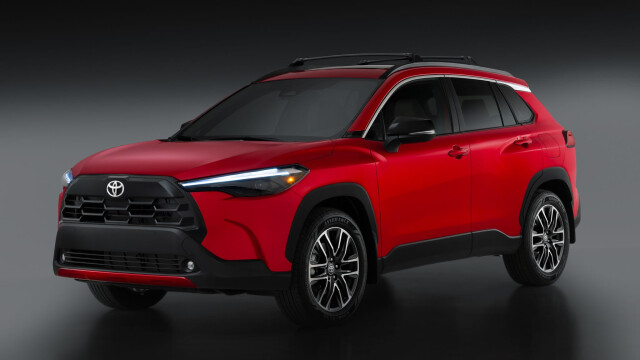
According to Toyota, this results in a system that is reliable, cost-effective, efficient, and environmentally friendly. Although full specifications for the 2026 RAV4 are not yet available, comparing the hybrid and gasoline-only 2025 RAV4 models highlights the advantages of the hybrid system. Fuel efficiency jumps from 29 to 39 MPG, and CO2 emissions drop from 320 to 224 grams per mile—substantial improvements. When scaled across the millions of hybrid RAV4s expected to be sold annually, the impact is significant.
Another standout feature of THS is its user-friendly nature. Owners simply refuel with gasoline less frequently and drive the vehicle as they would any standard car, without needing to alter their driving habits or lifestyle.
It's important to note that Toyota isn't the sole automaker offering such hybrid systems. Honda’s two-motor hybrid setup is comparable in both design and effectiveness, and Ford has also produced similar hybrids for many years. However, Toyota was the trailblazer and continues to lead by making hybrid models the standard for two of the world's most popular vehicles: the Camry and now, the RAV4.
Ultimately, the THS is not just bold—it's a proven, highly effective system that outperforms many alternatives. If faced with choosing between a conventional RAV4 and a hybrid version, the hybrid is unequivocally the better choice. With Toyota committing to this direction, the decision becomes even clearer. It’s the optimal path forward.
Photos in the catalog
More news