Toyota Aims to Integrate New Gas Engines Across All Platforms
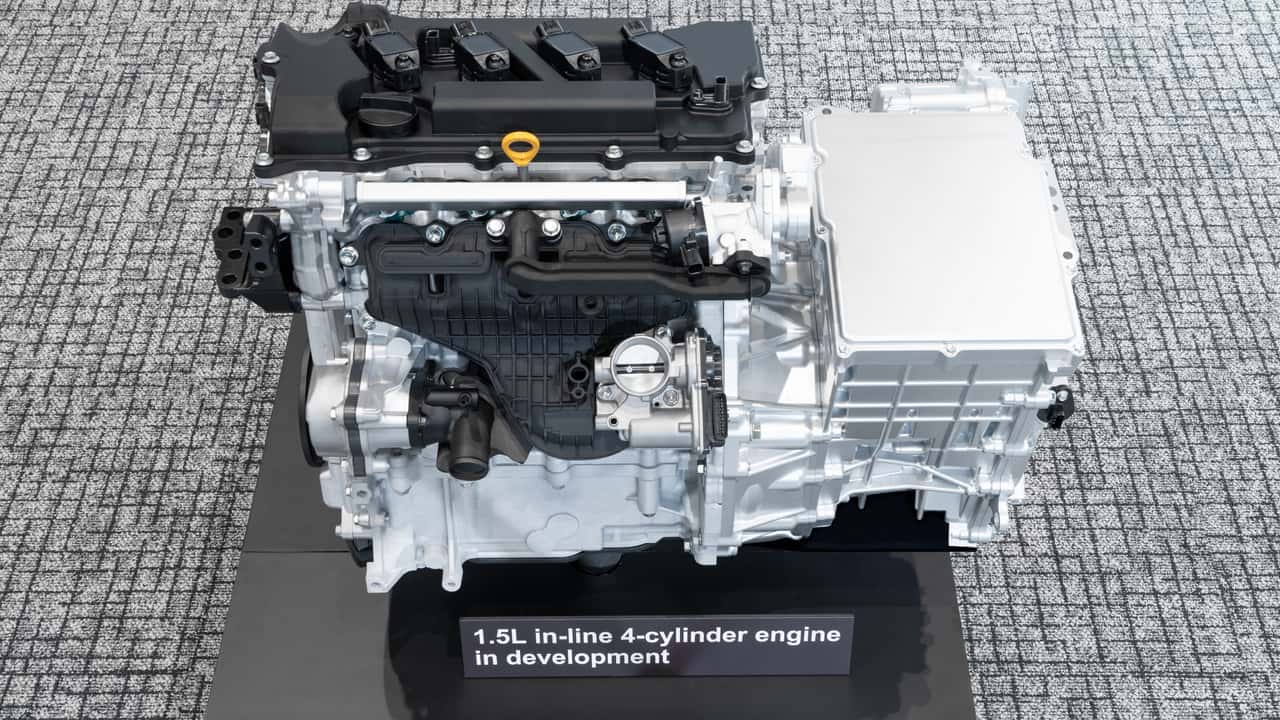
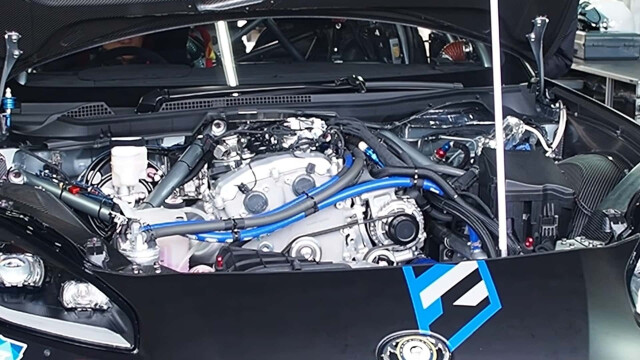
Toyota remains steadfast in its belief that internal combustion engines (ICE) hold a promising future, even as electric vehicles (EVs) gain traction. The world's leading automaker has solidified its long-term dedication to ICE technology by collaborating with Japanese counterparts Subaru and Mazda to develop a new series of gasoline engines. These compact and lightweight four-cylinder engines are being promoted by Toyota's Chief Technology Officer, Hiroki Nakajima, as a transformative solution for the industry.
Andrea Carlucci, Vice President of Product Strategy and Marketing for Toyota Europe, highlighted the adaptability of the upcoming engines in an interview with Automotive News. "Our objective is to fine-tune the new engines for a wide range of applications, whether they involve electric, hybrid, or hydrogen powertrains," she explained.
Flexible Engine Utilization
The concept of integrating a gas engine within an electric framework may seem unconventional, but Toyota envisions its use in extended-range electric vehicles (EREVs). In such vehicles, the combustion engine operates solely as a generator to recharge the battery, rather than directly driving the wheels. This allows the engine to function at optimal efficiency levels. Examples of this approach include the BMW i3 REX, the Ramcharger, Mazda MX-30, Scout’s upcoming SUV and truck, and Nissan’s E-Power models.
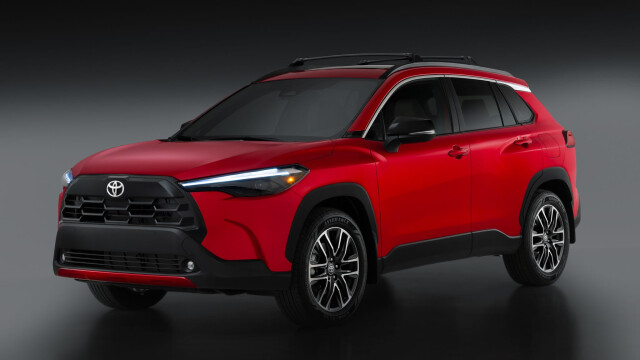
Toyota has already announced its intention to launch EREVs in the Chinese market through its joint venture with GAC. Models like the Highlander SUV and Sienna minivan will feature these extended-range capabilities. In these vehicles, the small engine will not be mechanically linked to the drivetrain; instead, electric motors will provide propulsion, with the engine solely enhancing the vehicle's range without eliminating the use of gasoline.
Advancements in Engine Efficiency
Back in 2018, Toyota achieved a thermal efficiency of 41 percent and is now aiming to improve upon this benchmark with its next-generation engines. These engines are designed to operate not only on traditional fossil fuels but also on biofuels, hydrogen, and synthetic fuels. In addition to full hybrids and EREVs, Toyota is exploring long-range plug-in hybrids. Carlucci estimates that achieving a 62-mile (100-kilometer) electric-only range is a crucial milestone.
The upcoming engine lineup includes naturally aspirated and turbocharged 1.5-liter engines, as well as a more powerful 2.0-liter turbo variant. Efficiency is not the sole focus, as the 2.0-liter engine will also have a performance version tailored for Gazoo Racing (GR) models, capable of delivering up to 600 horsepower in racing applications.
Innovative Vehicle Architectures
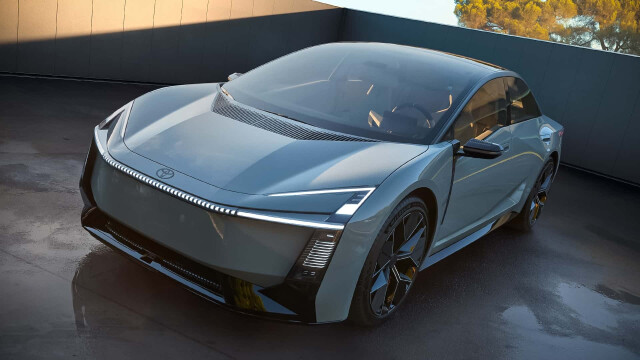
Carlucci also discussed Toyota’s approach to vehicle platforms: "Many manufacturers have adapted existing ICE platforms for partial electrification. Instead, we are developing EV-native platforms that can be adapted for plug-in hybrids or full hybrids without compromising the inherent strengths of the new platform."
Dedicated electric platforms are becoming more prevalent, with examples including Tesla’s platforms, Volkswagen Group’s MEB, Hyundai and Kia’s E-GMP, and Mercedes’ EVA. Additionally, some EV-centric platforms are versatile enough to accommodate combustion engines, such as Stellantis’ STLA series and VW Group’s upcoming Scalable Systems Platform (SSP), which will underpin Scout’s new models.
Aligning with Toyota chairman Akio Toyoda’s perspective that EVs will likely capture no more than 30 percent of the market, Carlucci advocates for a diverse array of powertrain options to provide consumers with greater flexibility. "We are not committed to pushing EVs in markets where there is insufficient demand," she stated.
More news