Electric Porsche Boxster prototype tested on track at Weissach facility
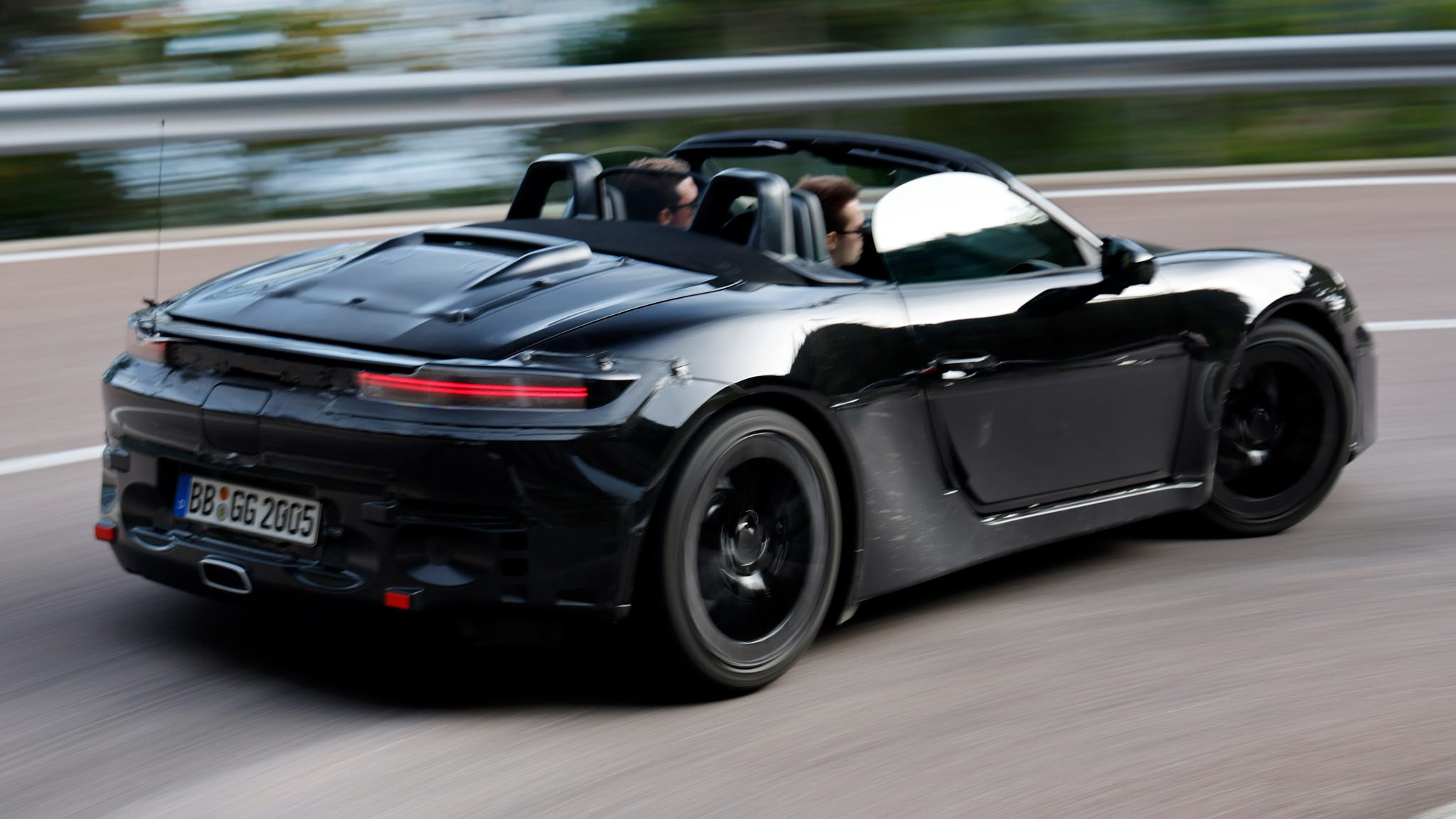
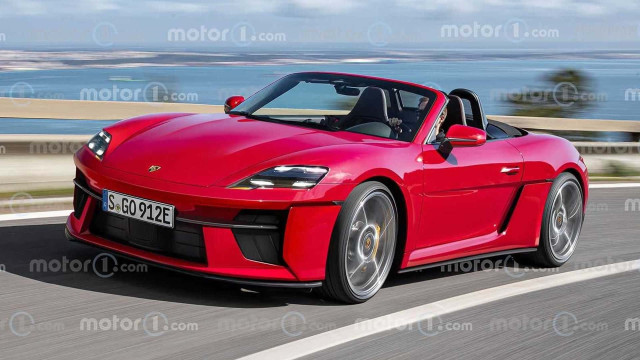
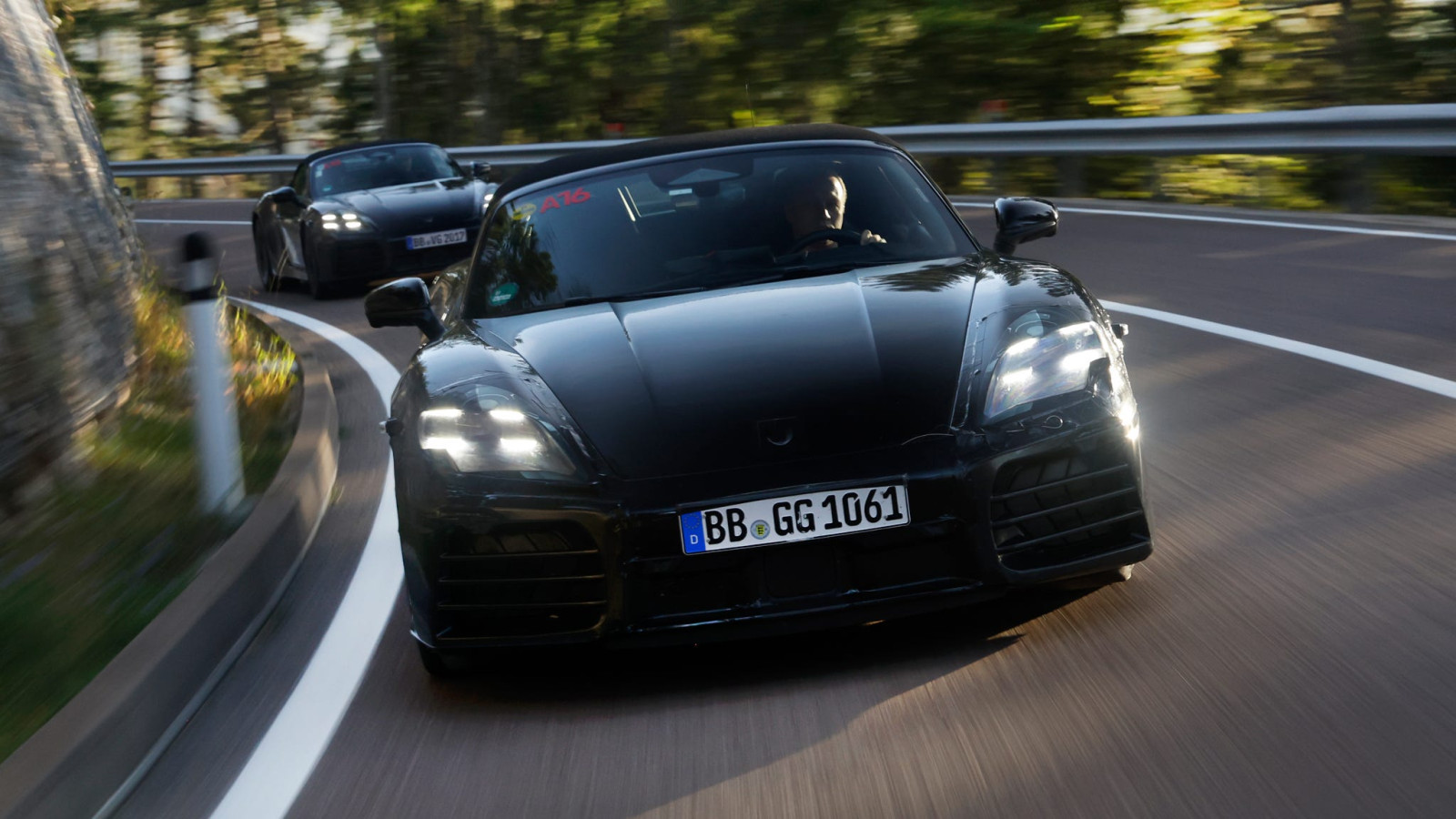
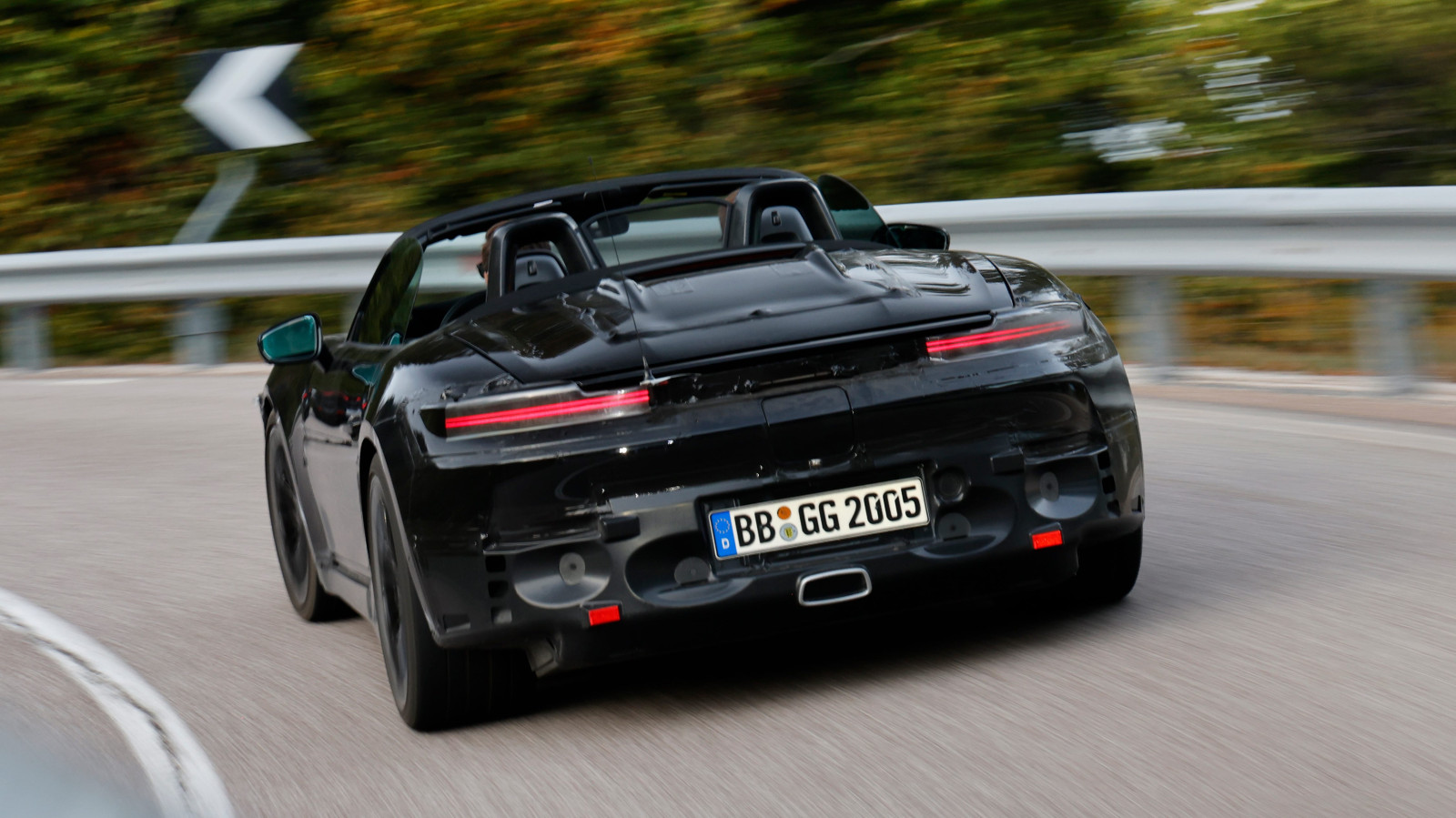
Journalists got their first passenger-seat experience in Porsche’s upcoming all-electric 718 Boxster and Cayman during a track run at the automaker’s Weissach test facility in Germany, ahead of their planned debut late next year.
The electric sports car relies on what Porsche calls its E-Core battery arrangement. Under this layout, the battery pack is packaged behind the passenger seats in the middle of the vehicle, ensuring a traditional mid-engine weight distribution and allowing occupants to sit in a low-slung sports car position. Porsche also updated its cylindrical cell technology, achieving roughly 20 percent more driving range and 50 percent quicker charging speeds than the brand's current production electric vehicles. Michael Steiner, deputy chairman and member of the executive board for research and development, noted that these gains were made without adding weight and with 15 percent lower materials costs.
From the passenger seat on the handling track, the prototype delivered classic sports car composure under hard driving. The instantaneous electric torque provides swift initial acceleration, while the low center of gravity and vehicle mass enhance mechanical grip through corners. The prototype absorbed aggressive contact with raised rumble strips with poise, accompanied by strong braking performance.
To recreate driver engagement, Porsche introduced synthetic acoustic feedback resembling a high-revving flat-six reminiscent of the 911 GT3, including throttle blips during downshifts. Gearshifts are simulated through the proprietary E-shift system. Instead of interrupting motor output and dropping torque during acceleration to mimic a gear change, Porsche engages a split-second overboost, delivering a distinct physical shift sensation to the occupants. The early prototype run demonstrated that the upcoming electric roadster aims to preserve the character and driving dynamics of its combustion predecessors.
Photos
Photos in the catalog
More news