Rolls-Royce 20/25 I gallery (1929–1936)
The Rolls-Royce 20/25 was an upgraded evolution of the Twenty, featuring an enlarged engine to handle heavier bespoke bodywork.
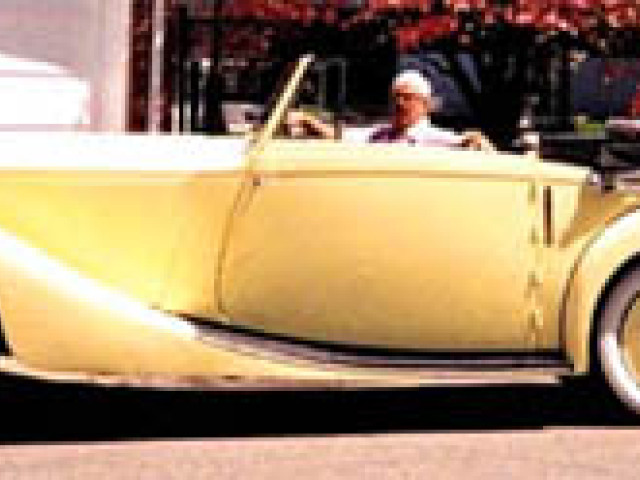
Introduced in 1929, the Rolls-Royce 20/25 succeeded the 20 HP to address customer demands for increased performance when fitted with substantial coachbuilt bodies. Built upon a rigid ladder-frame steel chassis, the vehicle retained solid front and rear axles with semi-elliptical leaf springs and adjustable hydraulic dampers. Standard practice dictated that clients ordered the chassis and running gear from the Derby works, subsequently commissioning custom coachwork from masters such as Hooper, Park Ward, Thrupp & Maberly, and Arthur Mulliner, yielding saloons, drophead coupés, landaulets, and sporting tourers. The heart of the 20/25 was an enlarged 3.7-litre (3,669 cc) inline six-cylinder overhead-valve petrol engine, featuring an increased cylinder bore, single dual-jet carburettor, and dual coil/magneto ignition, which substantially improved low-end torque and top speed. Power was transmitted to the rear axle via a four-speed manual gearbox, which received synchromesh on third and top gears in 1932. Four-wheel mechanical drum brakes were boosted by Rolls-Royce's renowned mechanical servo driven off the gearbox. Continual incremental refinements throughout its lifespan included thermostatic radiator shutters, an updated electrical charging system, and centralized chassis lubrication. The 20/25 proved enormously popular in the UK and overseas export markets, establishing a production record of 3,827 units by the time it was superseded by the 25/30 in 1936.