Maserati Biturbo I (Tipo AM331) gallery (1981–1994)
A landmark luxury sports range that pioneered twin-turbocharged technology for mass-production road cars.
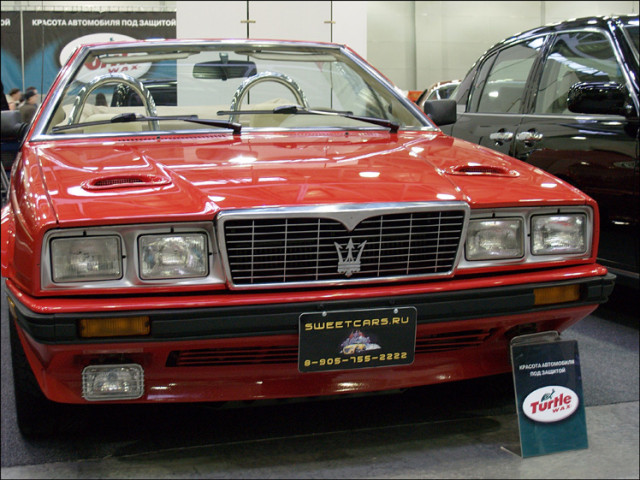
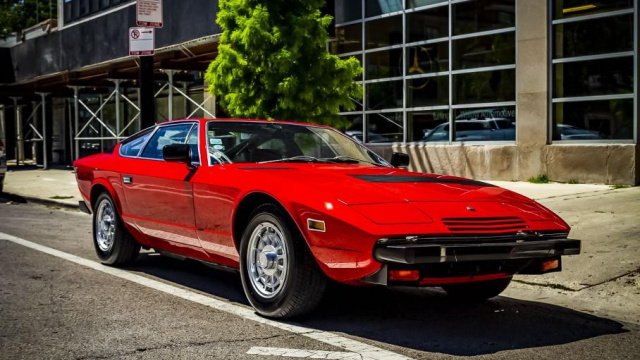
The Maserati Biturbo was launched in December 1981 as a pivotal model engineered to transform the marque into a higher-volume luxury performance automaker under Alejandro de Tomaso. Built on a brand-new steel unibody chassis featuring front MacPherson struts and semi-trailing rear suspension, the Biturbo lineup evolved rapidly. Originally penned by Pietro Frua as a two-door notchback coupe, the range expanded to include four-door executive sports sedans (such as the 420, 425, and 430 on a stretched wheelbase) and an open-top Spyder styled and assembled by Carrozzeria Zagato. The car achieved technical acclaim as the world's first production road vehicle equipped with a twin-turbocharged engine and three valves per cylinder. For the domestic Italian market subject to heavy engine displacement taxation, it carried a 2.0-liter 90-degree V6 (180–205 hp), while global export markets received 2.5-liter and later 2.8-liter V6 derivatives. Early iterations used a pressurized single Weber carburetor, which was replaced in 1986 by electronic multipoint fuel injection (designated by the 'i' suffix). Throughout its extensive lifespan, the model underwent visual and mechanical overhauls, most notably restylings by Marcello Gandini in 1988 and 1991 featuring sleeker aerodynamic lights, integrated bumpers, intelligent limited-slip differentials, and four-valve-per-cylinder (24v) powerplants. Transmissions ranged from 5-speed ZF manuals to 3-speed and 4-speed automatic gearboxes.
Maserati news