Saab 93 I gallery (1955–1960)
The Saab 93 was a pivotal evolution of the original teardrop sedan, introducing a three-cylinder two-stroke engine and revised suspension.
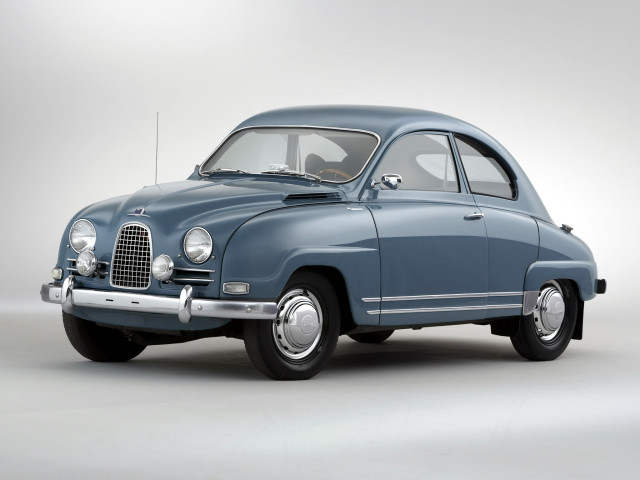
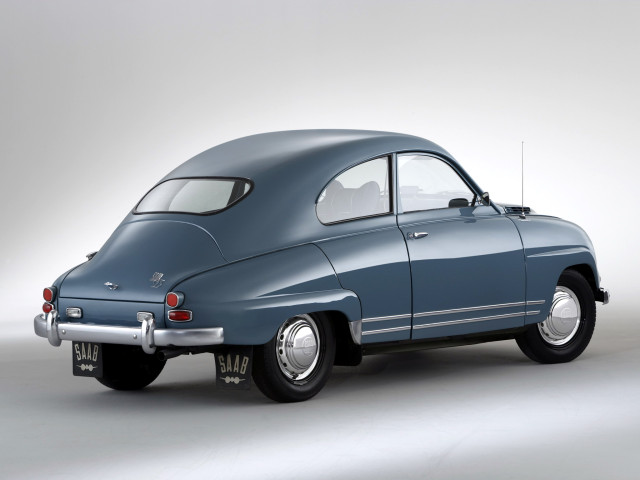
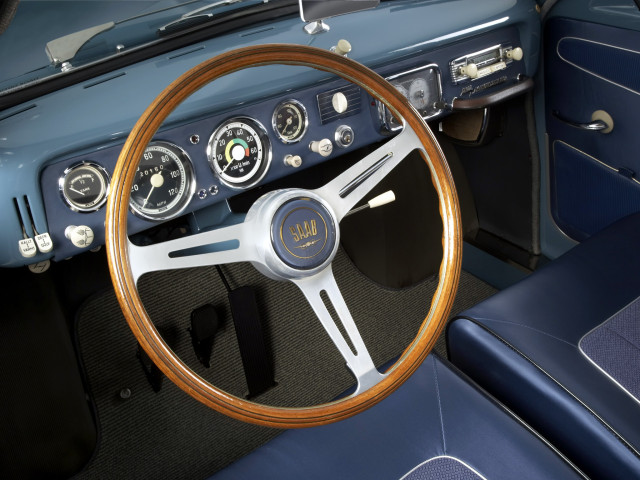
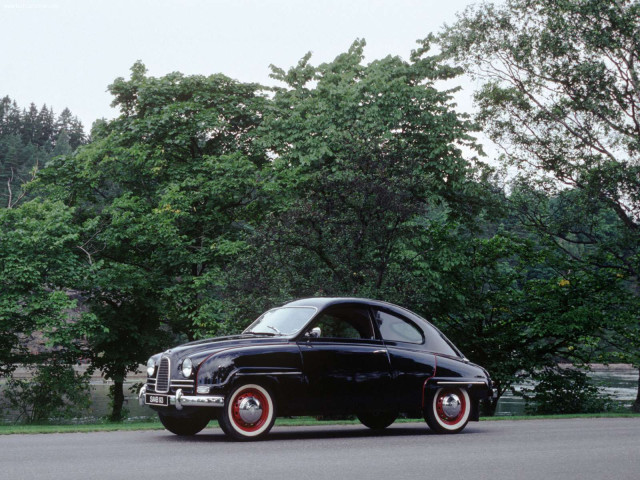
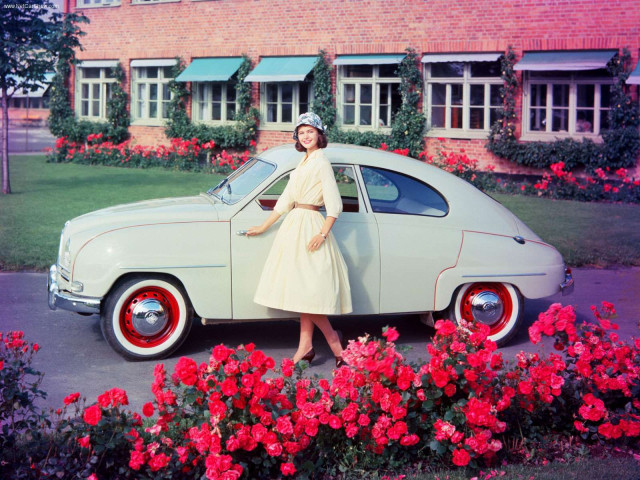
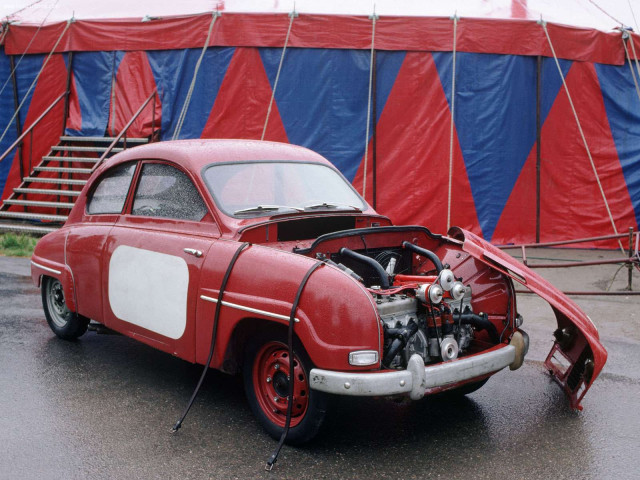
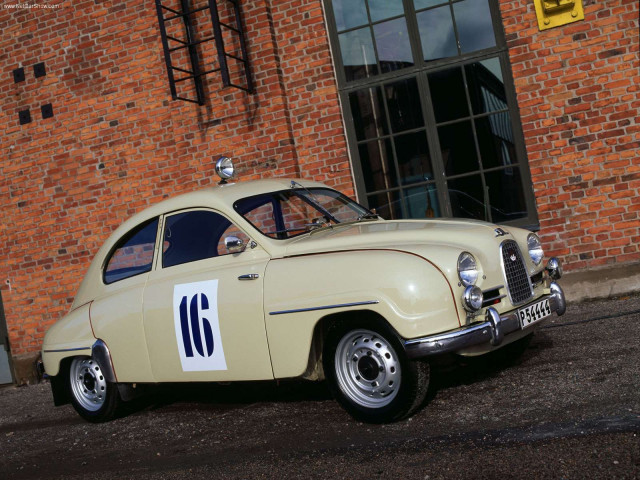
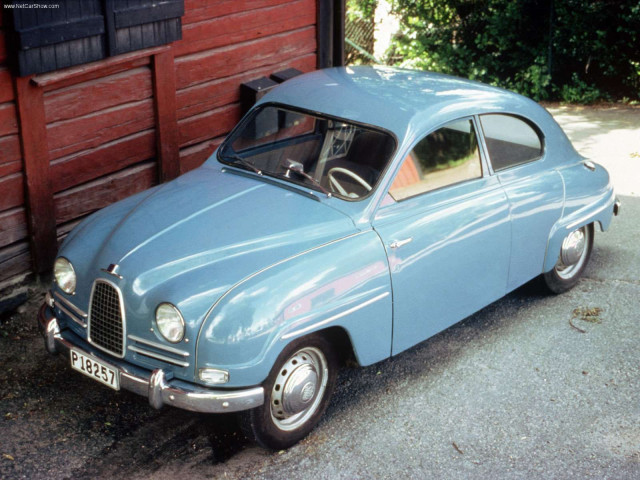
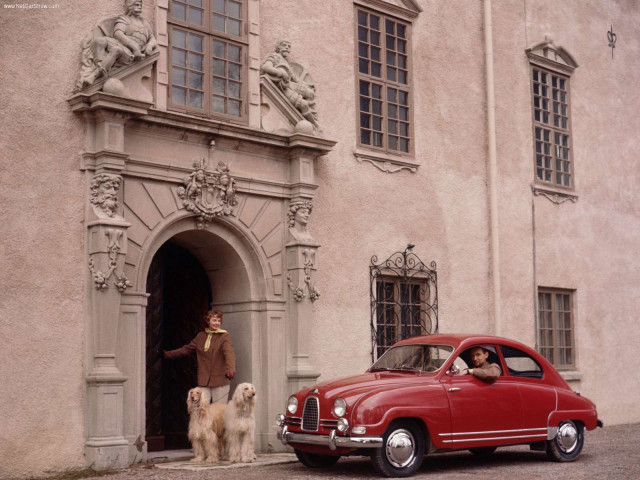
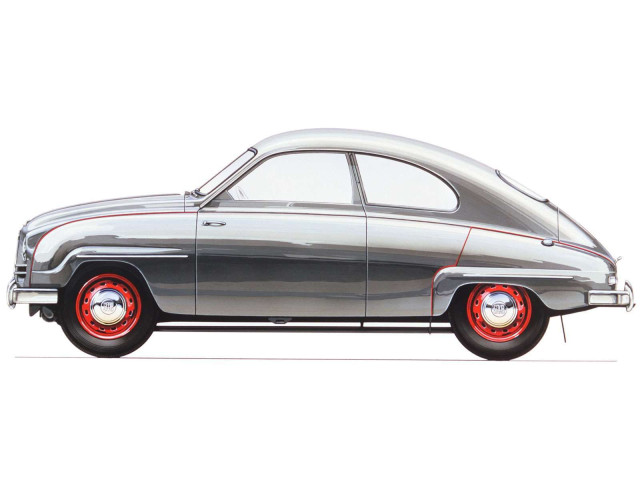
Introduced in December 1955 and produced through 1960, the Saab 93 replaced the company's first production car, the 92. Built on a heavily revised monocoque platform retaining the distinctive aerodynamic teardrop silhouette, it was offered as a two-door sedan. The most significant technical upgrade was a longitudinally mounted 748 cc three-cylinder two-stroke engine engineered by Hans Müller, producing 33 hp, which replaced the previous two-cylinder unit. Power was transmitted to the front wheels via a 3-speed manual gearbox equipped with a freewheel mechanism to prevent engine seizure during deceleration. The suspension was completely redesigned, switching from longitudinal torsion bars to front coil springs and a rigid U-beam rear axle. The car evolved through notable iterations: the 93B in 1957 introduced a single-piece curved windshield and modern turn signals, while the 93F in 1959 replaced rear-hinged suicide doors with front-hinged doors. A high-performance GT750 version was also introduced. The 93 achieved major rally victories and established Saab's commercial footprint in export markets, particularly the United States.