Saab 92 I gallery (1949–1956)
The Saab 92 was the company's inaugural production car, conceived by aerospace engineers with pioneering aerodynamics.
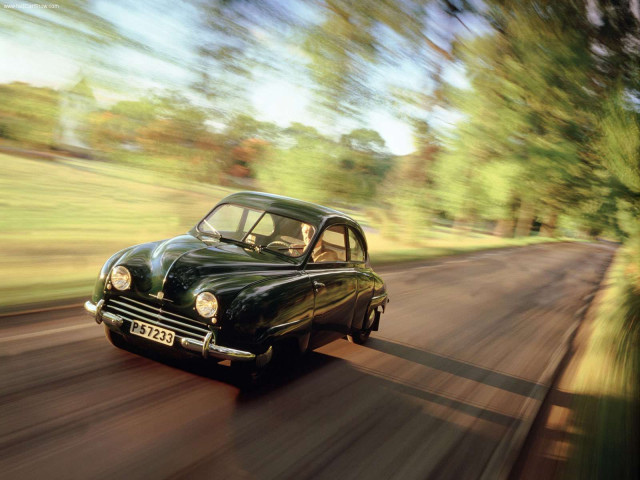
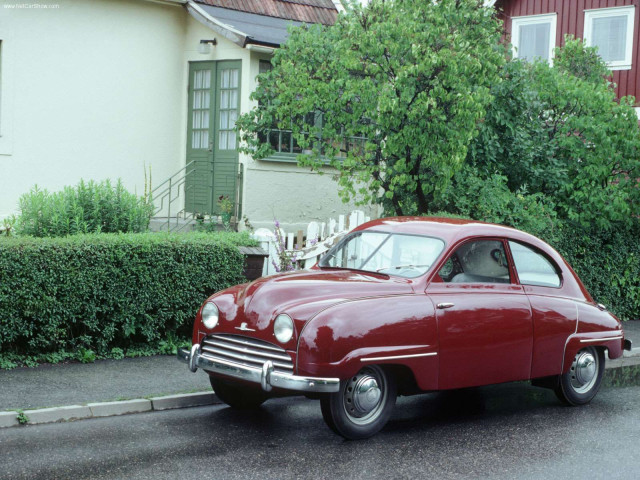
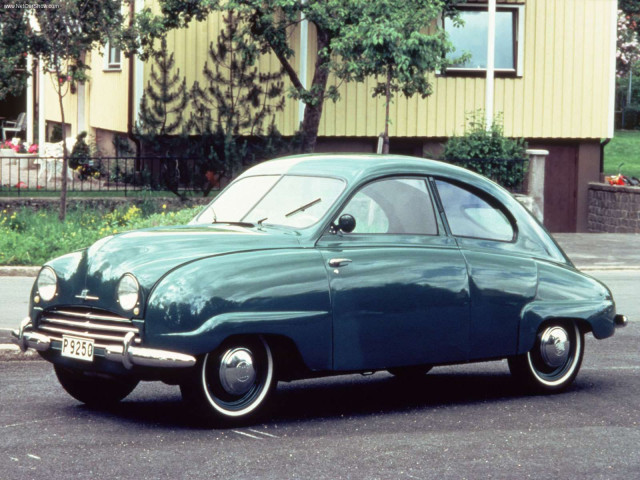
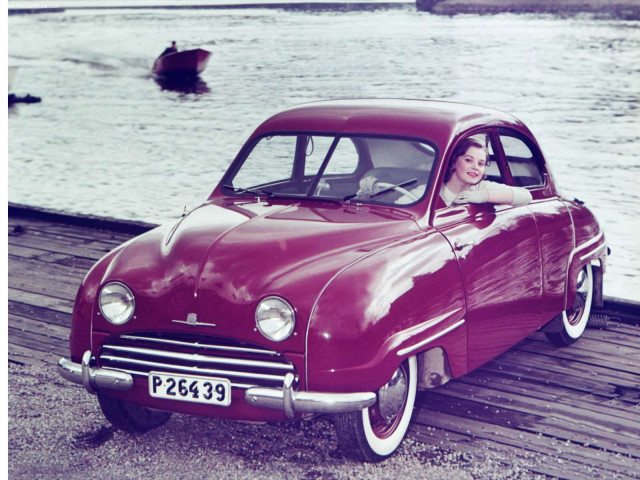
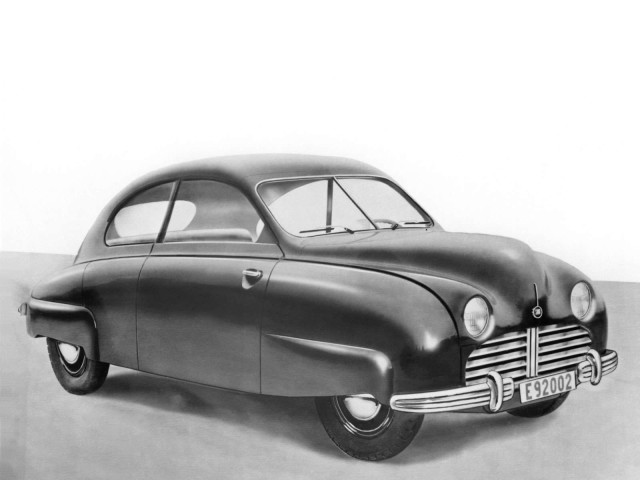
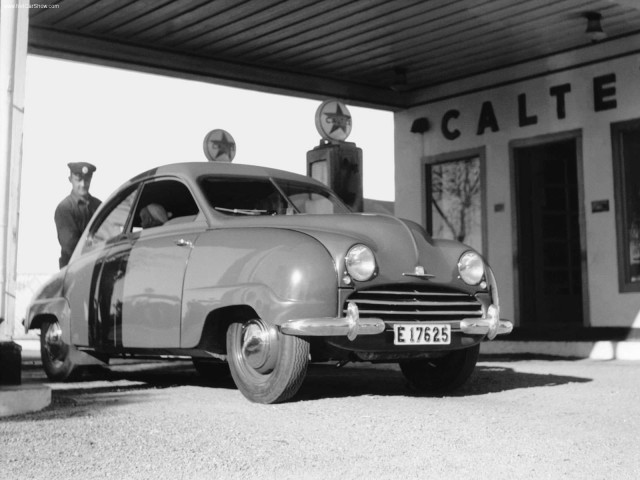
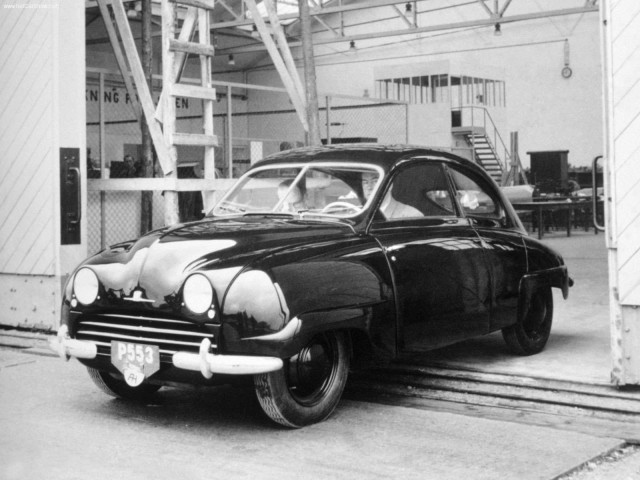
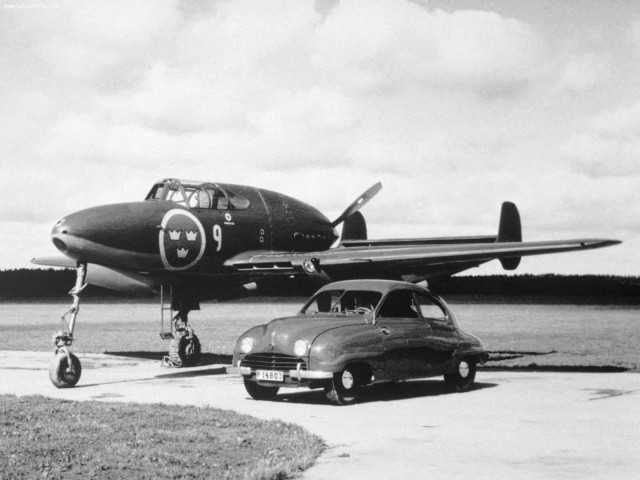
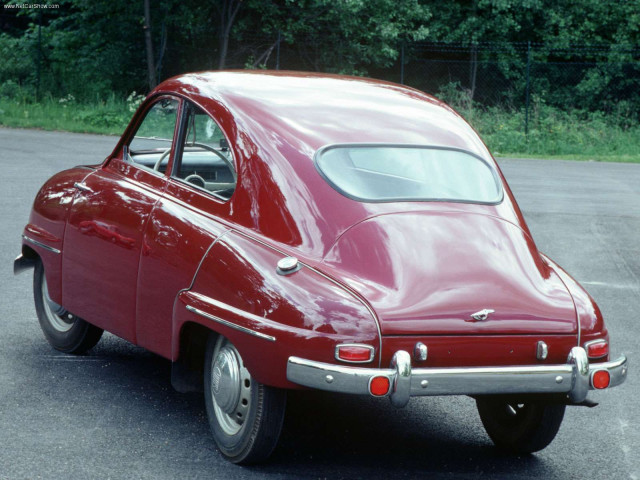
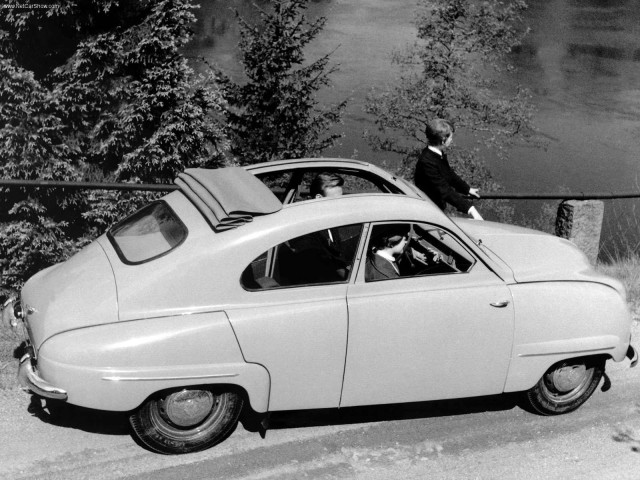
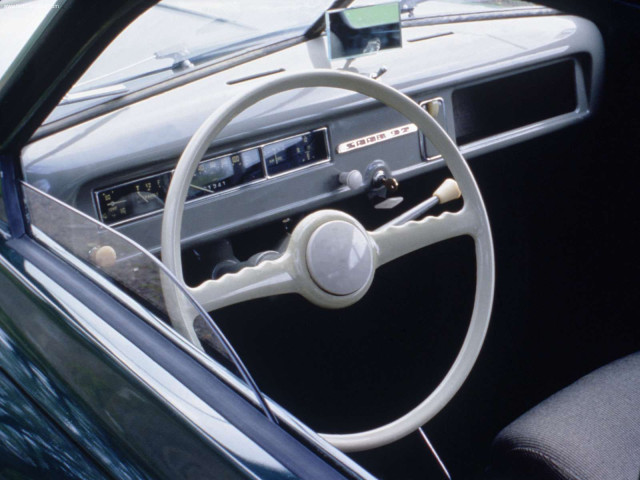
The Saab 92 was the very first production automobile manufactured by Swedish aerospace company Saab, with series assembly running from December 1949 until late 1956. Conceived by aircraft engineers led by Gunnar Ljungström and styled by industrial designer Sixten Sason, the vehicle featured a remarkably aerodynamic monocoque two-door sedan body boasting a drag coefficient of just 0.30. It was powered by a transversely mounted 764 cc two-stroke, two-cylinder thermo-siphon water-cooled engine delivering 25 hp, mated to a three-speed manual transaxle with a freewheel device. The chassis featured independent suspension with longitudinal torsion bars on all four wheels and hydraulic drum brakes. Initially, all cars were painted in a distinctive dark green surplus aircraft paint. In late 1952, the updated 92B variant arrived, introducing an externally opening trunk lid, a larger rear window, greater luggage capacity, and new paint options, followed by an engine output increase to 28 hp. The Saab 92 proved highly durable in Scandinavian winter conditions and laid the engineering foundation for the brand's future.