Lancia Alpha I (Tipo 51) gallery (1908–1909)
The Lancia Alpha (Tipo 51) was the very first production automobile crafted by the Italian marque, setting new engineering standards for its era.
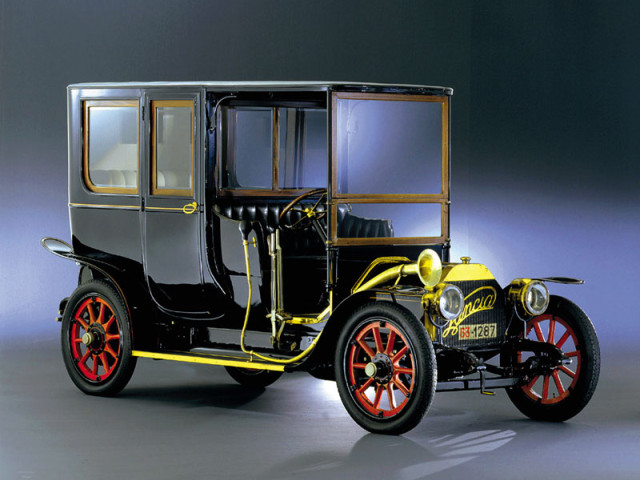
The Lancia Alpha (initially known as the Lancia 12 HP and bearing the factory designation Tipo 51) marked the debut of the automobile manufacturer founded by Vincenzo Lancia and Claudio Fogolin in Turin. First presented to the public at the Turin Motor Show in January 1908, the model introduced a Greek alphabet naming convention that would define the brand for decades. The car was engineered on an advanced pressed-steel ladder chassis, designed to accommodate various custom coachwork options including double phaeton, torpedo, landaulet, coupé, and roadster body styles. It was powered by a 2.5-litre (2544 cc) side-valve inline-four engine capable of developing 28 hp at 1800 rpm, which was exceptionally potent for a vehicle of its size at the time. Power was transferred to the rear wheels via a four-speed manual transmission and a modern cardan driveshaft rather than the noisy chain-drive systems common among contemporaries. The chassis featured rigid axles suspended by semi-elliptic leaf springs. With a top speed of around 90 km/h (56 mph), the Alpha proved to be reliable, fast, and agile. Over 100 units were built between 1908 and 1909, catering to discerning motorists across Italy, the United Kingdom, and continental Europe.